The House
Et De Te - Built on Materials Measured in Eras
The House of Et De Te was founded on the conviction that the objects grounding a space should carry a timeline far beyond our own.
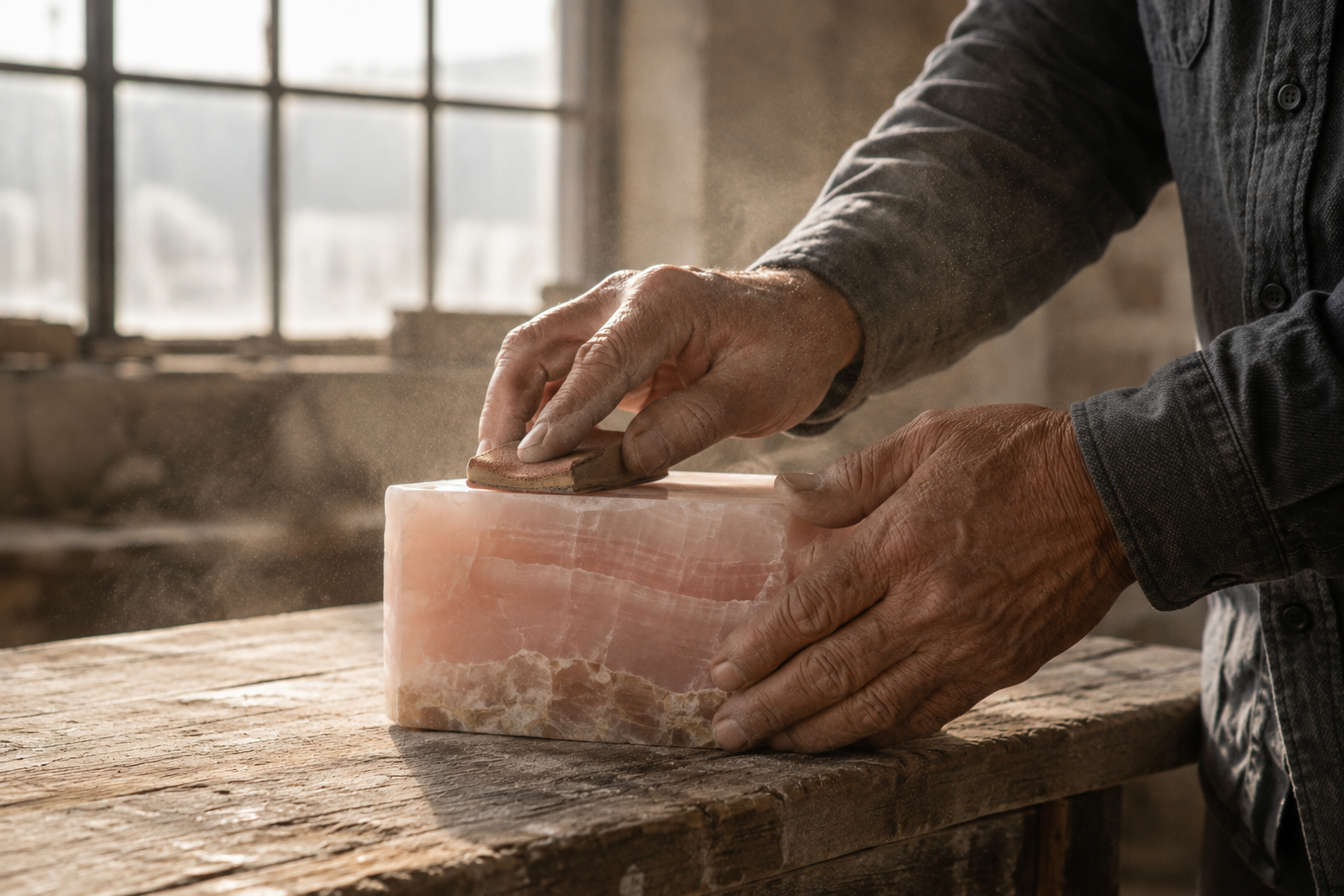
This philosophy leads us to physical mediums that possess an independent history, materials shaped by immense time, environment, and pressure, with the distinct evidence of that lineage left entirely visible. Their structural value is not merely found in their rarity or form, but in what they have endured, and in the deep variations left by everything that came before. We do not believe these differences make a material imperfect; we recognize that uniformity can be mechanical, but singular difference is rare.
With deep experience comes absolute discernment, a precise understanding of what deserves space, time, and permanence within an environment. It dictates a lifestyle of choosing fewer things, rejecting the transient, and guarding those that remain. Our House creates exclusively for this standard of curation.
Beginning our exploration with rare stone, we assemble enduring editions engineered to outlive the ephemeral. Each architectural work is acquired once and held permanently, serving as a continuous medium for our house collections and remaining within a personal collection for generations.