March 1, 2026
The Stone Remembers
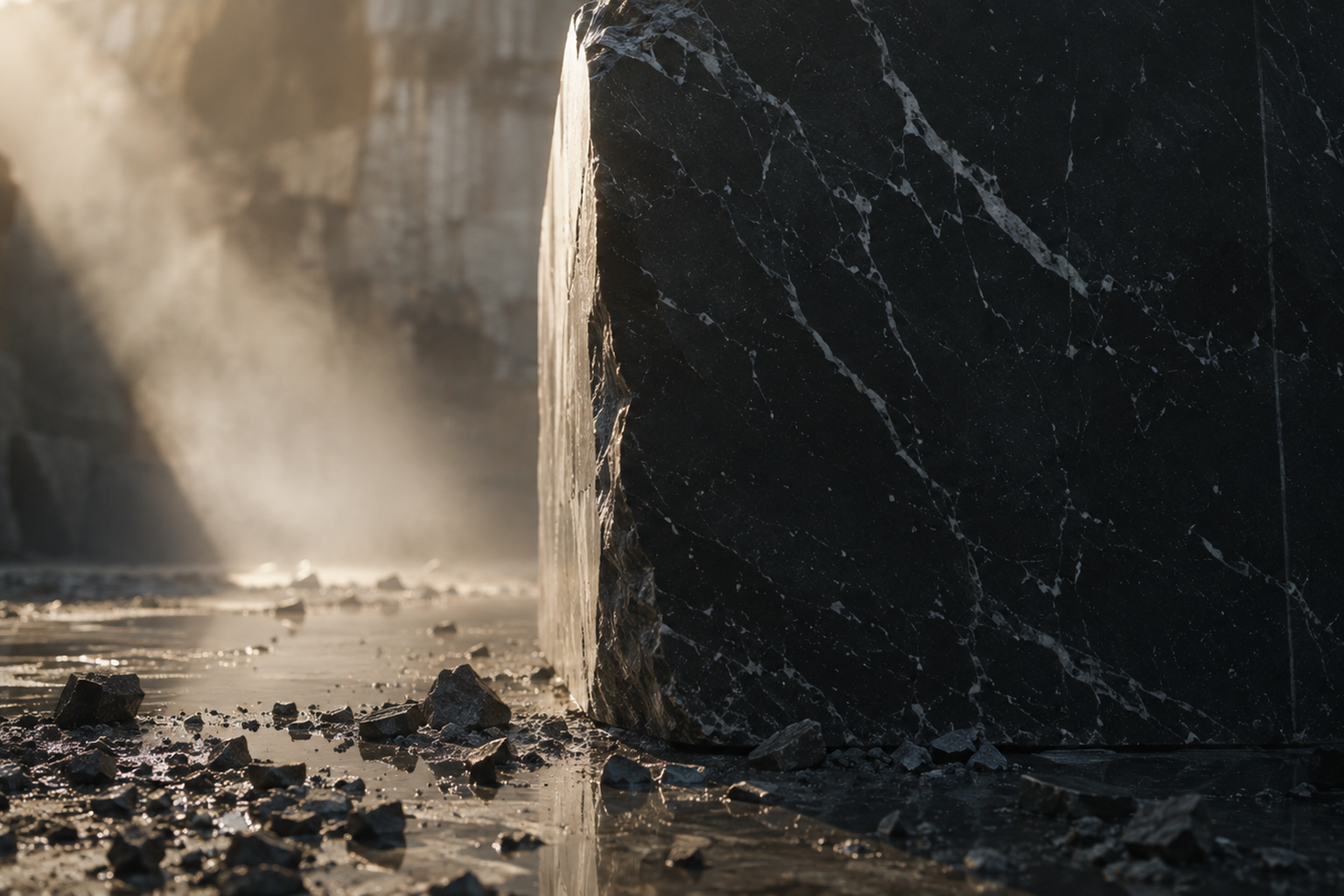
Stone carries evidence of everything that came before it.
Its colour, veining, fissures and density are the result of conditions that existed long before it reached us. Time, pressure, minerals, movement. Each left something behind.
We choose materials with histories of their own because we believe history gives an object more than provenance. It gives it continuity.
The marks within natural stone are not decoration applied to its surface. They are part of its formation. A vein records a change in mineral composition. A variation in colour belongs to conditions present when the material was forming. What we see today is the consequence of something that happened long before us.
We preserve those differences rather than remove them.
The craftspeople who shape our objects work with what the material gives them. They follow its formation through cutting, shaping and finishing, making decisions around characteristics that cannot be standardized or reproduced.
The result is that no two objects can carry exactly the same history.
That matters to us because Et De Te was never built around permanence for its own sake.
We make for those familiar with endurance themselves.
Lives are shaped in much the same way. Through years that leave evidence. Decisions made when no one was watching. Pressure carried quietly. Things refused. Things protected. Moments whose importance may be understood by only the person who lived them.
Over time, those experiences become discernment.
A clearer understanding of what deserves a place in one's life and what does not.
Perhaps that is why we are drawn to materials that have already endured something before they reach us.
They do not arrive untouched.
Neither do we.
We inherit the material and the knowledge that shaped it. Our responsibility is to add to that history without erasing what came before, and to leave something worthy of continuing after us.
The stone remembers where it came from.
The object carries that history forward.
Et De Te